

As the human body crosses the midpoint of the fifth decade, subtle alterations in skeletal tissue maintenance and nutrient assimilation begin to manifest. Many adults notice that physical routines and dietary patterns that served them admirably in their thirties no longer preserve their muscular strength or energetic vitality. This shift is neither an inevitable failure of discipline nor an untreatable consequence of age, but rather a predictable physiological realignment that demands an informed nutritional response.
Chief among the required dietary adjustments is an intentional reassessment of daily protein consumption. Skeletal muscle serves not merely as the organ of locomotion, but as the primary reservoir for amino acids, a vital regulator of systemic glucose disposal, and an indispensable defense against frailty. To maintain metabolic equilibrium and functional autonomy in the years following forty-five, one must understand how protein demands change, why historical minimum guidelines are often insufficient, and how to distribute nutrient-dense foods systematically across the day.
sports nutrition Resistance and the Aging Digestive Tract
The term sports nutrition resistance describes a state wherein skeletal muscle tissue becomes noticeably less sensitive to normal hyperaminoacidemia, the presence of circulating amino acids that typically prompts cellular repair. In younger adults, a modest bolus of fifteen to twenty grams of protein reliably stimulates muscle protein synthesis. Past the age of forty-five, however, the intracellular signaling pathway governed by the mechanistic target of rapamycin complex requires a distinctly higher concentration of essential amino acids to achieve that same regenerative response.
Concurrently, the gastrointestinal environment undergoes structural and secretory modifications. Gastric acid secretion often diminishes due to mild, age-related atrophic changes within the stomach lining, which impairs the activation of pepsinogens into active pepsin. When gastric proteolysis is curtailed, whole food proteins enter the duodenum in larger peptide fragments, burdening pancreatic enzyme reserves and prolonging the digestive process.
Furthermore, the splanchnic bed, which comprises the intestines and the liver, extracts a greater proportion of ingested amino acids before they can enter peripheral circulation. Research indicates that splanchnic extraction can claim up to 34% of ingested leucine in older individuals, substantially reducing the systemic delivery of this vital trigger to peripheral muscle beds. Thus, even if one consumes the identical portion of food favored in earlier decades, a smaller fraction of those amino acids reaches the musculature where structural maintenance takes place.
Calculating Real-World Intake: Grams Per Kilogram of Body Weight
For several generations, public health authorities have maintained a Recommended Dietary Allowance of 0.8 grams of protein per kilogram of body mass per day. It is critical to recognize that this benchmark represents a statistical minimum designed to prevent overt nutritional deficiency and negative nitrogen balance in sedentary young individuals, rather than an optimal target for tissue retention in mature adults. Geriatric and sports nutrition societies now advise that adults beyond forty-five consume between 1.2 and 1.6 grams of protein per kilogram of total body weight daily, with active or recovering individuals often requiring up to 1.8 grams.
When computing this requirement, clinicians often recommend using adjusted body weight or reference ideal weight if an individual carries significant excess adiposity. Because adipose tissue possesses far lower metabolic activity and amino acid turnover than lean muscle mass, calculating targets based on total mass in individuals with high body fat percentages can lead to unnaturally high intake targets that prove difficult to sustain without digestive discomfort.
| Body Weight | Standard Baseline (1.2 g/kg) | Moderate Activity Target (1.4 g/kg) | Rigorous Training Target (1.6 g/kg) |
|---|---|---|---|
| 60 kilograms (132 pounds) | 72 grams daily | 84 grams daily | 96 grams daily |
| 70 kilograms (154 pounds) | 84 grams daily | 98 grams daily | 112 grams daily |
| 80 kilograms (176 pounds) | 96 grams daily | 112 grams daily | 128 grams daily |
| 90 kilograms (198 pounds) | 108 grams daily | 126 grams daily | 144 grams daily |
To implement these figures sensibly, one should establish a stable baseline using the 1.2-gram threshold for three weeks before increasing intake further. Individuals with pre-existing renal impairments, such as reduced estimated glomerular filtration rates, or advanced hepatic disorders must consult their nephrologist or primary physician prior to initiating any substantial increase in daily nitrogen intake.
The Role of Leucine in Initiating Muscle Synthesis
Among the twenty amino acids utilized in human physiology, the branched-chain amino acid leucine occupies an exceptional position. It acts not merely as a structural building block for peptide chains, but as a direct chemical signal that engages the intracellular machinery responsible for protein synthesis. Because of the aforementioned sports nutrition resistance, mature muscle demands a specific threshold of intracellular leucine before synthesis can initiate, a phenomenon frequently termed the leucine trigger.
For most adults over forty-five, this threshold requires the presence of approximately 2.7 to 3.2 grams of leucine within a single meal. Consuming small quantities of protein continuously throughout the day, such as grazing on ten-gram portions every two hours, rarely allows plasma leucine concentrations to cross this restorative threshold. Consequently, total synthesis across twenty-four hours remains subdued despite an apparently adequate cumulative intake.
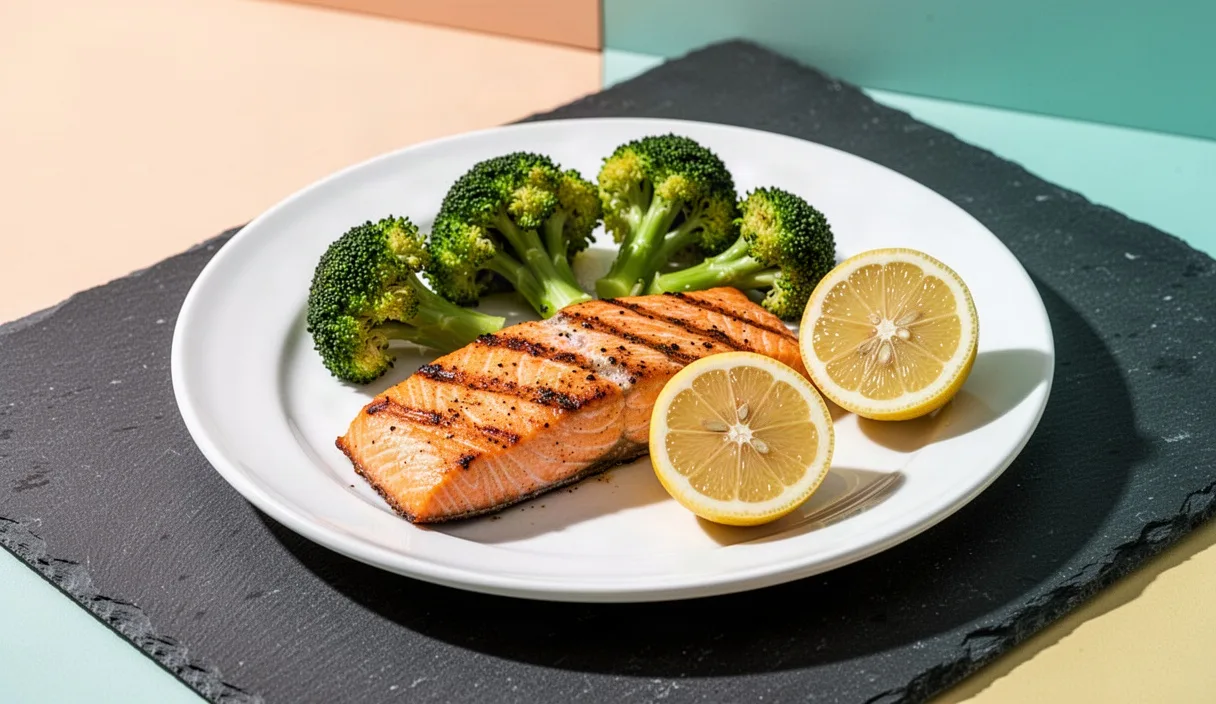
- Wild Atlantic Salmon: Delivers approximately 2.3 grams of leucine per 150-gram cooked fillet, requiring a modest addition of dairy or legumes to satisfy the full trigger.
- Chicken Breast: Provides roughly 3.1 grams of leucine per 140-gram cooked portion, reliably crossing the synthesis threshold independently.
- Greek Yogurt (Strained): Contains near 2.6 grams of leucine per 225-gram serving, serving as an effective breakfast foundation.
- Tofu (Firm): Yields approximately 1.9 grams of leucine per 200-gram serving, meaning plant-focused eaters must pair it with complementary ingredients like hemp seeds or edamame.
- Whey Protein Isolate: Yields approximately 2.8 to 3.2 grams of leucine per standard 30-gram scoop, providing a concentrated option when appetite is compromised.
Comparing Bioavailability: Animal Sources Versus Plant Blends
The total gram count listed on a food label does not fully reflect the volume of amino acids that peripheral tissues ultimately absorb and utilize. Protein quality is assessed through the Digestible Indispensable Amino Acid Score, which measures the ileal digestibility of individual amino acids against human requirements. Animal-derived proteins typically attain scores exceeding 1.15, indicating complete digestibility and an abundance of essential amino acids relative to human baseline needs.
Conversely, individual plant proteins frequently present lower scores, ranging from 0.58 to 0.88, due to structural components like fiber and phytates, alongside lower concentrations of sulfur-containing amino acids such as methionine or branched chains like leucine. While a diet comprised entirely of botanical sources is fully capable of maintaining physical robustness, it requires deliberate combination and slightly higher gross protein volumes to match the biological efficiency of animal foods.
| Protein Source | Average Leucine Content (per 30g protein) | Relative Digestibility (DIAAS Rating) | Digestive Characteristics |
|---|---|---|---|
| Dairy (Casein and Whey) | 3.2 to 3.6 grams | High (1.18 to 1.41) | Rapid to slow absorption; low digestive residue |
| Ruminant Meat and Poultry | 2.6 to 2.9 grams | High (1.12 to 1.17) | Moderate gastric transit; high micronutrient density |
| Whole Eggs | 2.4 to 2.6 grams | High (1.13 to 1.16) | Optimal biological value; slow gastric emptying |
| Isolated Soy Protein | 2.2 to 2.4 grams | Moderate to High (0.90 to 0.98) | Favorable amino acid profile; minimal fiber interference |
| Intact Legumes and Cereals | 1.7 to 2.1 grams | Moderate (0.58 to 0.72) | High dietary fiber; requires larger physical portion sizes |
Individuals who favor plant-based regimens after forty-five should consider increasing their gross daily target by approximately 12% to 15% above standard animal-based calculations. Combining diverse sources, such as brown rice protein with pea protein, creates a balanced amino acid distribution that overcomes individual botanical limitations without requiring excessive caloric expenditure.
Constructing a Dependable Three-Meal Daily Menu
To overcome sports nutrition resistance without overburdening the digestive tract, dividing protein into three substantial meals spaced four to five hours apart represents the most reliable dietary architecture. This structure ensures that the leucine trigger is reached at breakfast, lunch, and dinner, while granting the gastrointestinal lining sufficient rest between digestive phases. The following menu illustrates this approach for an individual targeting approximately 105 to 110 grams of total daily protein.
The Morning Repast
Many individuals consume an overwhelmingly carbohydrate-rich morning meal consisting of toast, fruit, or pastries, leaving their musculature in a catabolic state until mid-afternoon. A restorative morning plate should achieve at least 32 grams of protein:
- Three large whole eggs, scrambled gently with 30 grams of crumbled goat cheese, providing approximately 24 grams of protein.
- One slice of dense, whole-grain sourdough toast spread with two tablespoons of pumpkin seed butter, adding 9 grams of protein.
- A small side of stewed blackberries, offering polyphenols without disrupting amino acid uptake.
The Midday Meal
The afternoon meal should sustain circulating amino acid levels without precipitating afternoon lethargy. A targeted portion of 36 grams of protein fulfills this requirement comfortably:
- 130 grams of poached chicken breast or roasted turkey breast, providing roughly 31 grams of high-quality protein.
- A cold salad of mixed tender greens, half a cup of cooked French green lentils, and a vinaigrette made with cold-pressed olive oil, contributing an additional 8 grams of protein alongside essential fiber.
The Evening Meal
The final meal of the day must support prolonged nighttime recovery, supplying amino acids that remain available during sleep. A target of 38 grams of protein is suitable here:
- 160 grams of baked Arctic char or Atlantic cod fillet, yielding approximately 32 grams of easily assimilated protein.
- One cup of roasted young potatoes accompanied by 150 grams of steamed broccoli florets tossed with toasted pine nuts, contributing roughly 7 grams of complementary protein.
Common Mistakes in Midlife Dietary Planning
The most pervasive error observed in nutritional planning after forty-five is back-loading protein consumption into the late evening. While an evening dinner may provide fifty or sixty grams of protein, the human body cannot store excess singular boluses of amino acids for the following morning. The surplus is oxidized into urea or converted into metabolic intermediates, leaving the muscle tissue starved of sufficient signaling molecules during the first six to eight waking hours of the day.
A second regular mistake involves the uncritical substitution of collagen peptides for complete dietary proteins. While collagen supports connective tissue health and joint articulation, it is devoid of the essential amino acid tryptophan and contains negligible amounts of leucine. Labeling a morning coffee supplemented with twenty grams of collagen as a complete breakfast fails to prompt muscle protein synthesis and perpetuates muscle loss over time.
Finally, many people neglect the critical relationship between protein assimilation and progressive resistance exercise. While nutritional adjustments form the bedrock of maintenance, physical tension applied to the musculature sensitizes tissue to circulating amino acids for up to twenty-four hours. Consuming high-protein meals without regular, challenging physical resistance leaves a considerable portion of the body's synthetic potential dormant.
Establishing Your Nutritional Plan
Transitioning toward an optimized protein intake requires methodical, patient steps rather than abrupt, disruptive adjustments. The digestive tract benefits from an incremental approach, allowing enzymatic production and intestinal motility to adapt smoothly to increased dietary density.
Determine Your Baseline Target
Calculate your daily target using the conservative metric of 1.2 grams per kilogram of current body weight, adjusting downward toward reference ideal weight if you possess significant adiposity. Keep a detailed, non-judgmental record of your typical dietary intake for four consecutive days to observe your current natural baseline before altering portion sizes.
Rebalance the Morning Intake First
Before altering lunch or dinner, focus all initial effort upon bringing your breakfast protein content to a minimum of 30 grams. This single modification yields the most pronounced physiological benefit by ending the overnight catabolic fast and establishing steady glycemic stability for the remainder of the day.
Confirm Tolerance and Clinical Safety
Allow two weeks to pass after achieving your initial target. Monitor your digestion, tracking signs such as early satiety, bloating, or energy lulls. If your medical history includes metabolic or renal considerations, schedule a routine metabolic panel with your physician to evaluate blood urea nitrogen and creatinine levels, ensuring that your new dietary habits support your overall health for the decades ahead.